Soaring Above the Savanna: Drones Revolutionizing Wildlife Conservation
Ever dreamt of effortlessly surveying vast landscapes, tracking elusive creatures, and contributing to vital conservation efforts, all from the comfort of your armchair (well, almost)? The world of wildlife management is undergoing a dramatic transformation, thanks to the innovative use of drones. This page dives into the fascinating world of drone-based wildlife monitoring, drawing insights from key YouTube videos that highlight how these incredible machines are reshaping our approach to conservation. From understanding forest management’s impact on animal habitats to the precise tracking of radio-collared animals, drones are proving invaluable. This isn’t just about cool technology; it’s about making a real difference in preserving our planet’s biodiversity. Prepare for takeoff!
Key Takeaways from the Videos
Improving Wildlife Habitats through Forest Management: Videos like "Before and After: Timber Stand Improvement for Better Deer & Wildlife Habitat" and "How to Manage Timber Stands for Quality Wildlife Habitat" demonstrate the crucial role of responsible forestry in creating thriving ecosystems. Drones can efficiently survey large areas, assessing the effectiveness of timber stand improvement techniques and informing strategic habitat management decisions. This allows conservationists to better understand the impact of their work and adjust strategies accordingly.
Advanced Tracking and Monitoring: "Drone radio-tracking and thermal imaging with Dr Debbie Saunders" showcases the cutting-edge technology available for tracking animals. Drones equipped with radio receivers and thermal cameras enable researchers to monitor tagged animals across challenging terrain, collecting real-time location data and significantly improving the efficiency of research efforts.
Species-Specific Drone Monitoring Protocols: Yee Von Teo’s TEDx talk ("Drones and wildlife monitoring – is it a good idea?") emphasizes the need for tailored drone operation protocols. Her research focuses on developing specific methods for different species and habitats, minimizing disturbance while maximizing data collection. This highlights the importance of careful consideration and responsible drone use to avoid negative impacts.
The broader role of forest management in wildlife conservation: The lecture by Adam Janke highlights the vital connection between forest management and wildlife health. His work emphasizes the importance of using forest management techniques that both sustain forests and also protect the needs of the animals that call them home.
Drone Eyes in the Sky: Future Trends in Wildlife Conservation
The use of drones in wildlife management is still a burgeoning field, and its potential seems limitless. We can expect to see:
More sophisticated AI integration: Advanced image recognition and machine learning algorithms will automate species identification and population counting, leading to more efficient and accurate data collection.
Wider accessibility of drone technology: As drone technology becomes more affordable and user-friendly, more conservation organizations and researchers will be able to utilize these tools.
Expanded applications: Beyond tracking and monitoring, drones could be used for tasks like seed dispersal, anti-poaching patrols, and the delivery of critical supplies to remote areas. This has implications not only for animal conservation but also the safety and efficiency of personnel working in those locations.
Collaboration and Data Sharing: Enhanced data-sharing platforms will allow researchers and conservationists around the world to collaborate and pool their drone-gathered data, leading to a more comprehensive understanding of global wildlife populations and trends.
Taking Flight with Drone-Based Conservation
From enhancing habitat management to revolutionizing animal tracking, the impact of drones in wildlife conservation is undeniable. These technologies offer us a unique perspective on the natural world, allowing for more informed and effective conservation strategies. Scroll down now to watch video highlights and discover how drones are truly changing the game!
Discover the videos below
Before and After: Timber Stand Improvement for Better Deer & Wildlife Habitat Habitat (640)GrowingDeer.tv199,725 views | 2,185 | July 13 2021 21:30:01 (168 comments)[ Read more … ]
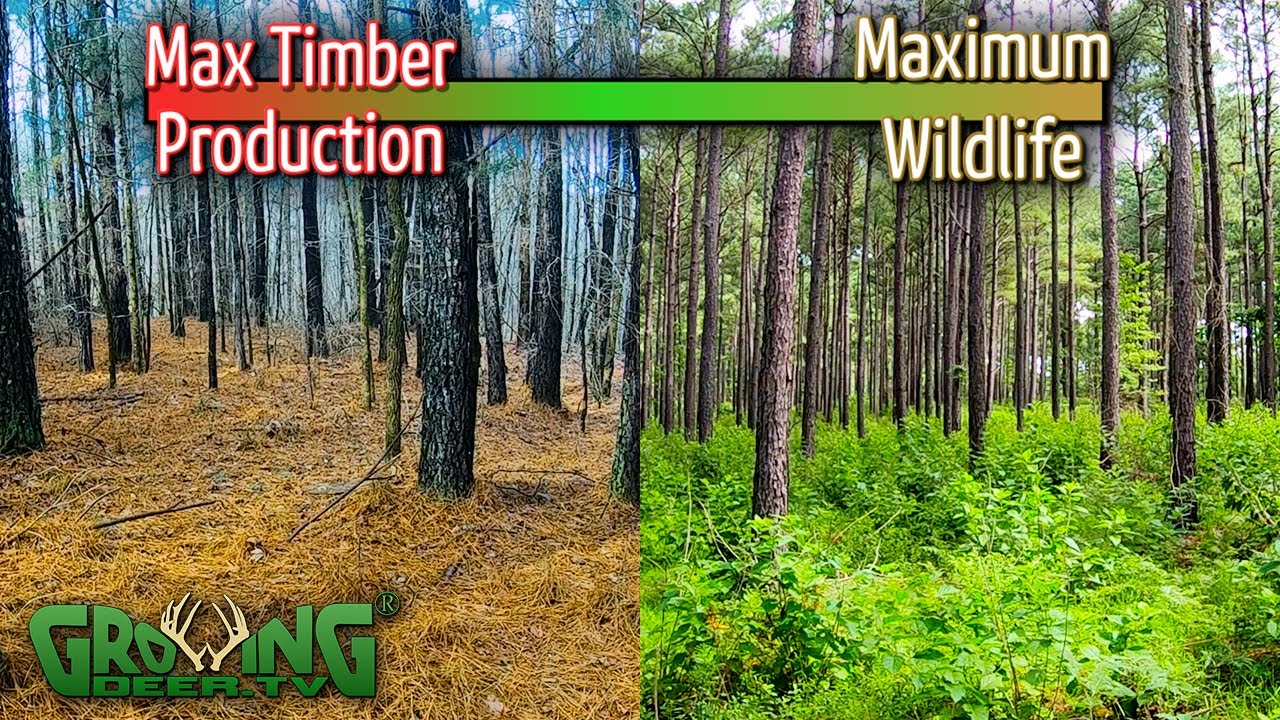
Timber Stand Improvement is a great tool to improve wildlife habitat which leads to bigger bucks, healthier deer, and better hunting. A well thought out plan for timber stand improvement can significantly improve the quality of habitat. It can also be a great way to improve the value of previously high graded timber – just as the TSI plan did in this video showing the forest before the TSI plan was implemented,.
In this video: definition of TSI, how to implement TSI in different regions and types of forests: cedar, hardwood, pine, etc., the difference between a plan that maximizes for timber value vs. wildlife, before and after timber stand improvement on a Missouri hunting property, the better hunting that can be had on a property with an open forest canopy. See the specific formulas to use two of the best timber stand improvement techniques: Hack and Squirt, Double Girdling.
Release the hunting habitat potential on the property where you hunt!
0:00 Start
0:29 Closed Canopy Forest
1:26 Cedar
1:40 Pines
2:14 Hardwoods
2:49 TSI Techniques: Hack & Squirt
3:37 Double Girdling
4:32 Tree Girdling Herbicide Mix
5:16 Timber Value Vs. Wildlife
6:25 Before Timber Stand Improvement
7:41 1 Year After TSI
7:53 2 Years After TSI
8:25 4 Years After TSI
12:16 Standing Dead Trees
13:34 Cut Cedars
14:46 Hunting Benefits
#Deerhunting #TeamOutdoors
Advertisement
How to Manage Timber Stands for Quality Wildlife Habitat (611)GrowingDeer.tv22,687 views | 452 | February 20 2022 23:09:53 (45 comments)[ Read more … ]
Implementing sound timber management practices should be a goal for every landowner from a habitat quality and income point of view. Grant explains how a property can provide high quality habitat and hunting as well as provide future income from timber sales.
@GrowingDeerTV
#TeamOutdoors #Timber #Forestry
Advertisement
Drone radio-tracking and thermal imaging with Dr Debbie SaundersWildlife Drones1,720 views | 40 | December 9 2020 22:07:58 (5 comments)[ Read more … ]
Conservation ecologist and CEO of Wildlife Drones, Dr Debbie Saunders, shared the latest advancements and applications of drone radio-tracking and thermal imaging technology at the 2020 Australasian Wildlife Management Society (AWMS) virtual conference.
Wildlife Drones has developed the world’s most innovative radio animal-tracking system using drones so you can track your radio-tagged animals like never before. Join us as we take to the skies and show you how drones can make animal tracking so much easier! We empower you to collect more data, more often with less effort using innovative drone technology
» Rapidly survey difficult terrain
» Track multiple animals simultaneously
» Get real-time location data
Check out our other videos here: https://www.youtube.com/c/WildlifeDrones
Follow us on Facebook: https://www.facebook.com/WildlifeDrones
Follow us on LinkedIn: https://au.linkedin.com/company/wildlife-drones
Follow us on Twitter: https://twitter.com/WildlifeDrones1
Follow us on Instagram: https://www.instagram.com/wildlifedrones
Sign up for our Newsletter: https://wildlifedrones.net/mailing-list-sign-up/
Interested to find out more? Book a free virtual demo here: https://meetings.hubspot.com/Debbie50/wildlife-drones-virtual-demo
Advertisement
Drones and wildlife monitoring – is it a good idea? | Yee Von Teo | TEDxHobartTEDx Talks8,966 views | 179 | March 21 2022 20:54:59 (7 comments)[ Read more … ]
Drones and wildlife conservation – is it a good idea? A passionate take on drones and wildlife conservation/monitoring, including the advantages and limitations.
Yee Von is passionate about wildlife conservation and ecology. She is a PhD candidate at the University of Tasmania. Yee Von’s PhD focuses on large mammal monitoring in Tasmania using unmanned aerial vehicles, a.k.a. drones. She aims to develop species-specific protocols for drone monitoring of Tasmanian animals, as well as site-specific protocols tailored to certain habitats, e.g., agricultural areas, native grassland, open forest, and closed forest. She considers it especially important to figure out the optimum flight altitude to get the best images whilst causing minimal animal disturbance. Her techniques will include the use of thermal imaging cameras for those species that are most active at night, deep-learning tools that will identify and count species observed by the drones on the spot, and complementing drone monitoring with traditional spotlight surveys. This talk was given at a TEDx event using the TED conference format but independently organized by a local community. Learn more at https://www.ted.com/tedx
Advertisement
Forest Management for WildlifeIllinois Extension Forestry596 views | 14 | November 13 2023 14:23:49 (1 comments)[ Read more … ]
Adam Janke, Wildlife Extension Specialist at Iowa State University, presents on forest management for wildlife as part of the 2023 Illinois Beginning Forest Landowner Short Course virtual class.
How Drones Are Revolutionizing Grizzly Bear Management in MontanaLC Drone Solutions14 views | 0 | November 21 2024 01:22:36 (4 comments)[ Read more … ]
Discover how drones are transforming wildlife management in Montana! In this video, I touch on how drones are being used to effectively deter grizzly bears from human settlements and livestock, achieving an impressive 91% success rate.
Link to article:
Drones Prove Highly Effective at Deterring Grizzly Bears in Montana, Study Shows
https://dronexl.co/2024/11/17/drones-effective-deterring-grizzly-bears-montana/
Email me @ lamerec@drone-solutionsllc.com
🔹 Highlights:
How drones outperform traditional bear hazing methods
The role of the Autel EVO II drone in wildlife management
Expanding drone applications for managing wolves and other wildlife
Let me us know your thoughts on this groundbreaking use of technology in the comments! Don’t forget to like, subscribe, and hit the notification bell for more updates on the latest in drone tech
Patryk Alexander is an associate copy editor at 4kVideoDrones.com, where he sharpens articles and helps keep the website's content clean and error-free. With a background in creative writing, Patryk brings a unique perspective to his editing that helps make 4kVideoDrones.com's content engaging and informative. When he's not editing or writing, Patryk enjoys spending time with his family and exploring the great outdoors.