
Glimpses from the Edge: Drone Air-Ground Coordination Unfolding
The desert air hung thick with the promise of power, the metallic tang of jet fuel a faint undercurrent. Across continents, in labs far removed from the dust and heat, another story unfolds – the intricate dance of robots, both in the air and on solid ground. These glimpses, caught in the digital ether of YouTube, offer fleeting but potent insights into the evolving landscape of Drone Air-Ground Coordination. This isn’t some abstract concept relegated to sterile military briefings. It’s happening now, on display in Zhuhai’s sprawling airshow and in the collaborative efforts of researchers pushing the boundaries of robotics. What does it look like when the digital eye in the sky works in seamless concert with forces on the ground? What are the implications, the possibilities, and the challenges that arise when these technologies converge? These are the questions whispered in the wind, the questions this ground-level look seeks to illuminate.
Key Observations from the Field and the Lab
-
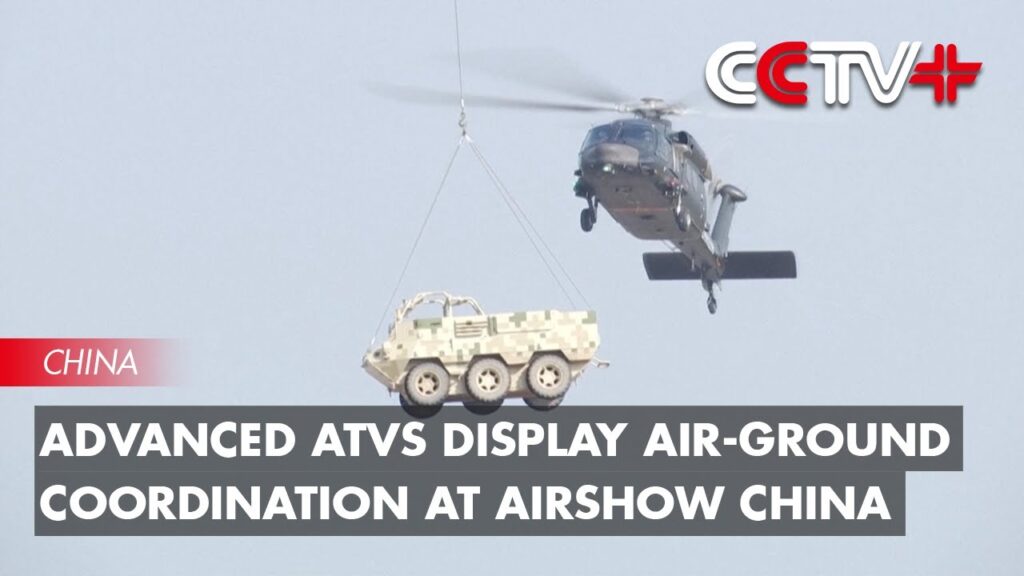
Precision on Parade: The videos from Airshow China showcase a clearly defined operational concept. The term “smooth air-ground coordination” is explicitly used in both the CCTV+ and CGTN reports regarding the advanced ATVs. While details on the how are scarce in these promotional pieces, the repeated emphasis suggests this synchronized action is a key feature and selling point. Imagine the scenario: aerial assets providing real-time reconnaissance, guiding agile ground units with pinpoint accuracy. This isn’t just about speed; it’s about efficiency and minimizing exposure. The low camera angles in the CGTN video (Video 2) offer a sense of being among the vehicles, highlighting their agility and the potential for coordinated movement under aerial guidance.
-
Beyond the Battlefield: Collaborative Robotics Taking Flight: Shifting from military demonstrations to the realm of research, the “Air-to-Ground Coordinated Robot Motion” video (Video 3) presents a fascinating departure. This isn’t about ATVs storming a simulated objective. This is about problem-solving in complex, real-world environments. The challenge they address – manipulating long and flexible objects – immediately conjures images of disaster relief, construction in precarious locations, scenarios where human access is difficult or dangerous. The video description highlights “telepresence framework with haptic and visual feedback,” a crucial element in maintaining human oversight and control in these complex operations. It’s a vision of human-machine teaming that goes beyond remote control, hinting at a future of shared intelligence and nuanced interaction.
-
The Language of Coordination: While the Airshow China videos use general terms like “smooth coordination,” the KUKA Innovation Award entry provides more technical insight. Keywords like “aerial manipulator,” “ground-based robot manipulator,” “force controlled despite aerodynamics,” and “tele-presence framework” paint a picture of the complex engineering and software that underpins this coordination. This isn’t simply about flying a drone and driving a vehicle. It’s about creating a shared understanding of the environment, a common operational picture that allows both aerial and ground assets to act in concert. The mention of “human guidance” in the KUKA description underscores that even in advanced robotic systems, the human element remains critical.
The Evolving Synergy: From Airshow Spectacle to Real-World Application
The contrast between the two sets of videos is striking, yet both speak to the growing importance of Drone Air-Ground Coordination. The Chinese demonstrations, while promotional in nature, highlight the tactical advantages and the direction in which military applications are moving. The KUKA Innovation Award entry, conversely, showcases the potential for this technology in civilian applications, areas where collaboration between aerial and ground robots can enhance safety and efficiency. Looking ahead, we can anticipate seeing more sophisticated algorithms and AI driving this coordination, enabling increasingly autonomous and adaptable systems. The challenge lies in ensuring robust communication links, secure data sharing, and maintaining ethical oversight as these technologies become more integrated into our world.
See the Coordination in Action
Scroll down to witness these key moments firsthand. Each video offers a valuable perspective on the unfolding story of Drone Air-Ground Coordination, a story with implications that reach far beyond the battlefield.
Explore the highlighted videos below


About the Author
