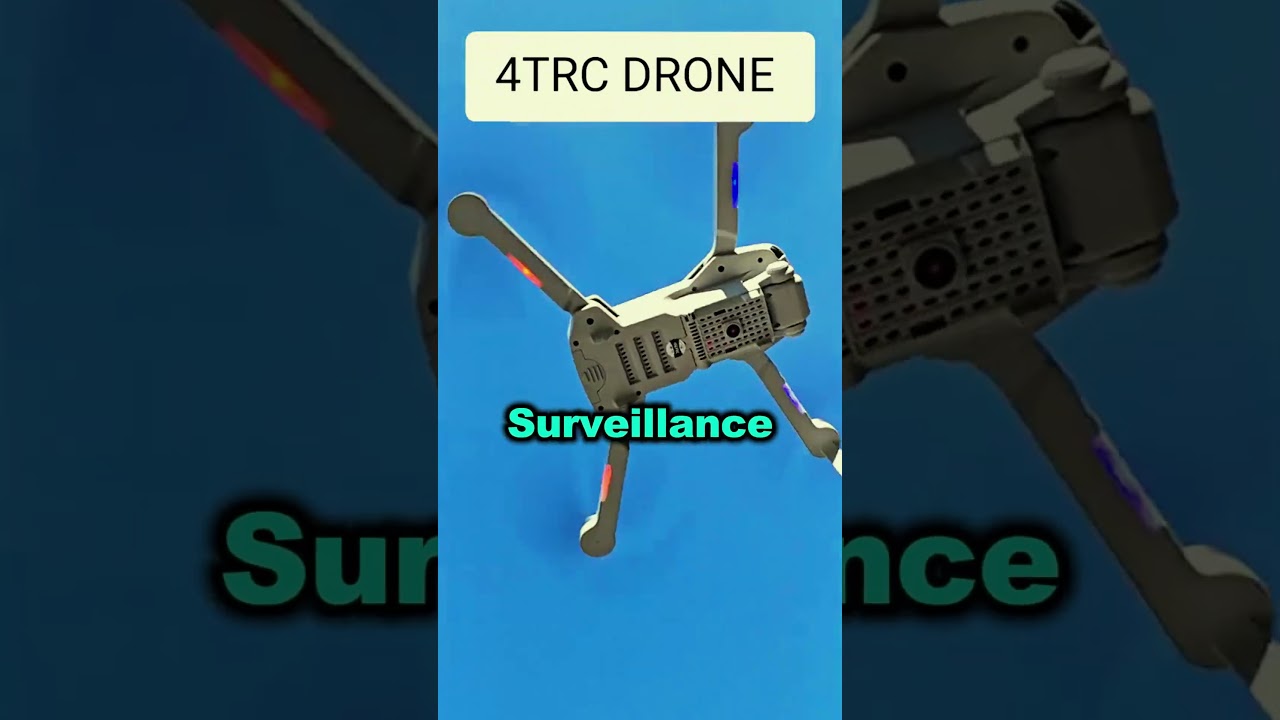
From the dense canopies of African rainforests to the vast savannas, a silent battle is being waged against wildlife poaching. These videos offer a thrilling glimpse into how cutting-edge drone technology is turning the tide, giving conservationists a crucial advantage in protecting endangered species. We’ll explore real-world deployments, examining the innovative ways drones, AI, and other tech are being used to detect poachers, track animals, and gather critical data in the fight against this devastating crime. Ever wonder how a thermal camera on a silent drone can pinpoint poachers in the dead of night? Or how AI can analyze movement patterns to predict poaching hotspots? We’ll dive into these questions and more.
High-Flying Highlights: Key Takeaways
Eyes in the Sky: Drones provide real-time surveillance over vast areas, impossible to cover effectively on foot. This allows rangers to respond rapidly to poaching threats and intercept poachers before they can harm animals.
AI Power: Artificial intelligence is being integrated with drone systems to analyze data and identify potential poaching activity, enhancing detection accuracy and speed. Think automated pattern recognition flagging suspicious movement within a reserve.
More Than Just Eyes: Drones are becoming multi-purpose platforms. Beyond surveillance, they are used for deploying sensors, tracking tagged animals, creating detailed habitat maps, and even deterring poachers with their presence.
Boots on the Ground + Bots in the Air: Effective anti-poaching strategies combine drone technology with on-the-ground ranger teams, maximizing the impact of both. Coordination is key: drones relay real-time intel, guiding rangers for swift intercepts.
A Global Fight: The videos highlight the widespread use of anti-poaching drones in diverse locations and showcase different types of drones and strategies being employed, highlighting the evolving nature of this technology-driven battle. From fixed-wings for long-range patrols to agile quadcopters for close-in observation, it’s a diverse aerial arsenal.
Training Matters: Effective drone operation is crucial. Specialized training programs for rangers, like the one shown in Mali, are essential for maximizing the impact of these tools in the field. Understanding drone flight dynamics, sensor operation, and data analysis is key to successful deployments.
Beyond the Horizon: The Future of Anti-Poaching Drones
The integration of AI and machine learning with drone platforms is clearly transforming anti-poaching efforts. We see a trend towards more specialized payloads – imagine multispectral cameras detecting camouflaged traps or even sound sensors identifying gunshots. Swarms of autonomous drones working collaboratively could be on the horizon, covering even larger areas with minimal human intervention. Beyond hardware, enhanced data analysis will be essential – predictive algorithms could forecast poaching hotspots before they even happen.
Ready for Takeoff?
This isn’t just about gadgets; it’s about saving magnificent creatures from extinction. Scroll down to watch the video highlights and witness this incredible technology in action – you’ll see firsthand how drones are becoming vital allies in the fight against wildlife crime.
View the highlighted videos below
How Drones Are Fighting Poaching in South AfricaSeeker39,399 views | 2,385 | April 6 2021 10:59:49 (121 comments)[ Read more … ]
The immense density of the rainforest is one of its more incredible defining characteristics, so this company uses a combination of drones and advanced AI technology to spot poachers and stop them before any animals are harmed.
» Subscribe to Seeker! http://bit.ly/subscribeseeker
» Watch more Human! http://bit.ly/HUMANplaylist
» Visit our shop at http://shop.seeker.com
If you’ve ever been out in a National Park like the Kruger National Park, there are a lot of lions, there are a lot of leopards. Even although these are highly experienced trackers that understand which way to walk, and where to walk, and how to walk into the wind and not with the wind, it’s still a daunting task for anybody. So typically what happens is we would integrate a drone unit with an anti-poaching unit.
Poachers are creatures of habit. They have entry and exit points into the various parks. So we would then go out probably eight o’clock in the evening and we’d basically stay there right up until sunup the following morning and we would go and plot a grid and we would fly and patrol that grid looking for a possible incursion. If an incursion is detected, the first thing that happens is that the drone is placed into a holding pattern, or a loiter pattern, and we would simply loiter in the radius at an altitude that keeps us working in a stealthy manner. We would have no navigation lights turned on during this process. And we would be watching the activity of the poacher on the ground. And at the same time, the drone team, that consists of a sensor operator and a pilot, would radio in and start giving coordinates to the anti-poaching unit.
The best result is that the poachers are apprehended and are arrested and end up in the court case. And with a bit of luck, they’re prosecuted for doing this. Sometimes, there can be a firefight and the poachers will return fire and there can be a gunfight and there can be fatalities. I mean, that happens. It’s not always like that, but probably 30% of the time, that’s real.
Read More:
Drones Are Helping Catch Poachers Operating Under Cover of Darkness
https://time.com/5279322/drones-poaching-air-shepherd/
“Stopping or even just slowing poachers could have big benefits for the countries where they operate. Residents of such countries often depend on wildlife to support the local economy, in part by attracting tourists who want to see animals like elephants and rhinos run wild. But poaching has broader global ramifications, too.”
High Above, Drones Keep Watchful Eyes on Wildlife in Africa
https://www.nytimes.com/2017/03/13/science/drones-africa-poachers-wildlife.html
“Since taking over operations here, the group has confiscated upwards of 18,000 illegal snares, made over 100 arrests, installed more than 60 miles of electric fencing and removed 261 elephants to another reserve.”
Elephant Poaching Pushes Species To Brink Of Extinction
https://www.npr.org/2013/03/06/173508369/elephant-poaching-pushes-species-to-brink-of-extinction
“African forest elephants have been in trouble for a while, but only now have scientists figured out that more than half of them have died over the past decade. It took hundreds of researchers nine years, walking literally thousands of miles, counting piles of elephant dung as well as elephant carcasses stripped of their ivory tusks, to realize that the majority of the dead had been shot.”
____________________
Across the globe, elephants are poached for their tusks, pangolins for their scales, and totoaba fish for their bladders. Tackling the fourth largest crime industry in the world isn’t easy, but biologists, roboticists, detectives and even NASA scientists are getting creative in the hopes of making a difference. In this Seeker series, we’ll investigate true stories of wildlife crime and meet the people who are working to protect the world’s most endangered and persecuted animals.
Visit the Seeker website https://www.seeker.com
Seeker on Facebook https://www.facebook.com/SeekerMedia/
Seeker on Twitter http://twitter.com/seeker
Advertisement
How Drones Are Helping In The Fight Against Poaching | TIMETIME3,792 views | 42 | May 31 2018 18:00:08 (6 comments)[ Read more … ]
It’s hard to catch a poacher in the wild. Now, a pioneering group of conservationists, entrepreneurs and researchers say the combination of drones and artificial intelligence may change the game and solve the night vision problem.
Subscribe to TIME ►► http://po.st/SubscribeTIME
Get closer to the world of entertainment and celebrity news as TIME gives you access and insight on the people who make what you watch, read and share.
https://www.youtube.com/playlist?list=PL2EFFA5DB900C633F
Money helps you learn how to spend and invest your money. Find advice and guidance you can count on from how to negotiate, how to save and everything in between.
https://www.youtube.com/playlist?list=PLYOGLpQQfhNKdqS_Wccs94rMHiajrRr4W
Find out more about the latest developments in science and technology as TIME’s access brings you to the ideas and people changing our world.
https://www.youtube.com/playlist?list=PLYOGLpQQfhNIzsgcwqhT6ctKOfHfyuaL3
Let TIME show you everything you need to know about drones, autonomous cars, smart devices and the latest inventions which are shaping industries and our way of living
https://www.youtube.com/playlist?list=PL2862F811BE8F5623
Stay up to date on breaking news from around the world through TIME’s trusted reporting, insight and access
https://www.youtube.com/playlist?list=PLYOGLpQQfhNJeIsW3A2d5Bs22Wc3PHma6
CONNECT WITH TIME
Web: http://time.com/
Twitter: https://twitter.com/TIME
Facebook: https://www.facebook.com/time
Google+: https://plus.google.com/+TIME/videos
Instagram: https://www.instagram.com/time/?hl=en
Magazine: http://time.com/magazine/
Newsletter: time.com/newsletter
ABOUT TIME
TIME brings unparalleled insight, access and authority to the news. A 24/7 news publication with nearly a century of experience, TIME’s coverage shapes how we understand our world. Subscribe for daily news, interviews, science, technology, politics, health, entertainment, and business updates, as well as exclusive videos from TIME’s Person of the Year, TIME 100 and more created by TIME’s acclaimed writers, producers and editors.
How Drones Are Helping In The Fight Against Poaching | TIME
https://www.youtube.com/user/TimeMagazine
Advertisement
How Tech is Saving Wildlife from Poachers! #tiger #elephant #panther #lion #wildlife #animals #factsPatron of Wildlife3,644 views | 21 | September 21 2024 14:15:01 (6 comments)[ Read more … ]
Wildlife poaching is a global crisis, severely impacting species like elephants, rhinos, and pangolins. This devastating practice not only threatens these magnificent animals but also disrupts ecosystems, food chains, and climate regulation. Fortunately, technology is stepping up to combat poaching. Drones, equipped with high-resolution cameras, patrol vast and challenging terrains, providing real-time information that enhances ranger responses, significantly reducing incidents in areas like Kenya. GPS collars offer real-time data on animal movements, aiding in the development of effective conservation strategies. AI systems analyze data from various sources to predict poaching occurrences and assist law enforcement in dismantling trafficking networks. Support and investment in these technologies are crucial for protecting our wildlife and preserving nature.
Timestamps:
00:00:00 Poaching’s Grip on Our Planet
00:01:01 Drones Take on Poachers
00:01:41 GPS and the Fight for Survival
00:02:22 The New Guardian of the Wild
00:03:32 Technology as a Beacon of Hope
By becoming a #PatronOfWildlife, you are joining a community of passionate individuals committed to safeguarding our natural world. Together, we can ensure that future generations can enjoy the beauty and diversity of wildlife.
👍 Don’t forget to like, share, and subscribe for more content on how you can help protect wildlife and the environment. Let’s make a difference together!
Follow Us On:
Twitter: https://twitter.com/WildlifeMints
Instagram: https://www.instagram.com/wildlifemints/
Facebook: https://www.facebook.com/WildlifeMints
Chengeta advanced drone training in MaliChengeta Wildlife12,803 views | 100 | February 15 2018 13:10:45 (4 comments)[ Read more … ]
Training the Malian anti poaching brigade in advanced drone use to aid in the pursuit of wildlife traffickers and poachers in Mali.
Advertisement
A light patrol aircraft to assist with the anti-poaching workSABC News2,919 views | 30 | September 10 2018 06:09:26 (0 comments)[ Read more … ]
Kruger National Park is one of the largest game reserves in Africa. It covers an area of 19,485 square kilometers in the provinces of Limpopo and Mpumalanga. It has been divided in 22 sections with Section Rangers in charge of the management of these areas. With the ongoing Rhino poaching onslaught the majority of their time is spent on anti-poaching activities. We met up with the Letaba section ranger who is lucky enough to have a light patrol aircraft to assist with the anti-poaching work.
For more news, visit: sabcnews.com
Advertisement
ALTI Transition: Protecting Wildlife, Preserving Nature.ALTI1,044 views | 29 | October 24 2024 12:28:34 (0 comments)[ Read more … ]
The ALTI Transition is a game-changer for conservation missions, enabling rangers to scan vast, hard-to-reach areas and track targets in real-time, even in total darkness. All without disturbing the environment.
Patryk Alexander is an associate copy editor at 4kVideoDrones.com, where he sharpens articles and helps keep the website's content clean and error-free. With a background in creative writing, Patryk brings a unique perspective to his editing that helps make 4kVideoDrones.com's content engaging and informative. When he's not editing or writing, Patryk enjoys spending time with his family and exploring the great outdoors.