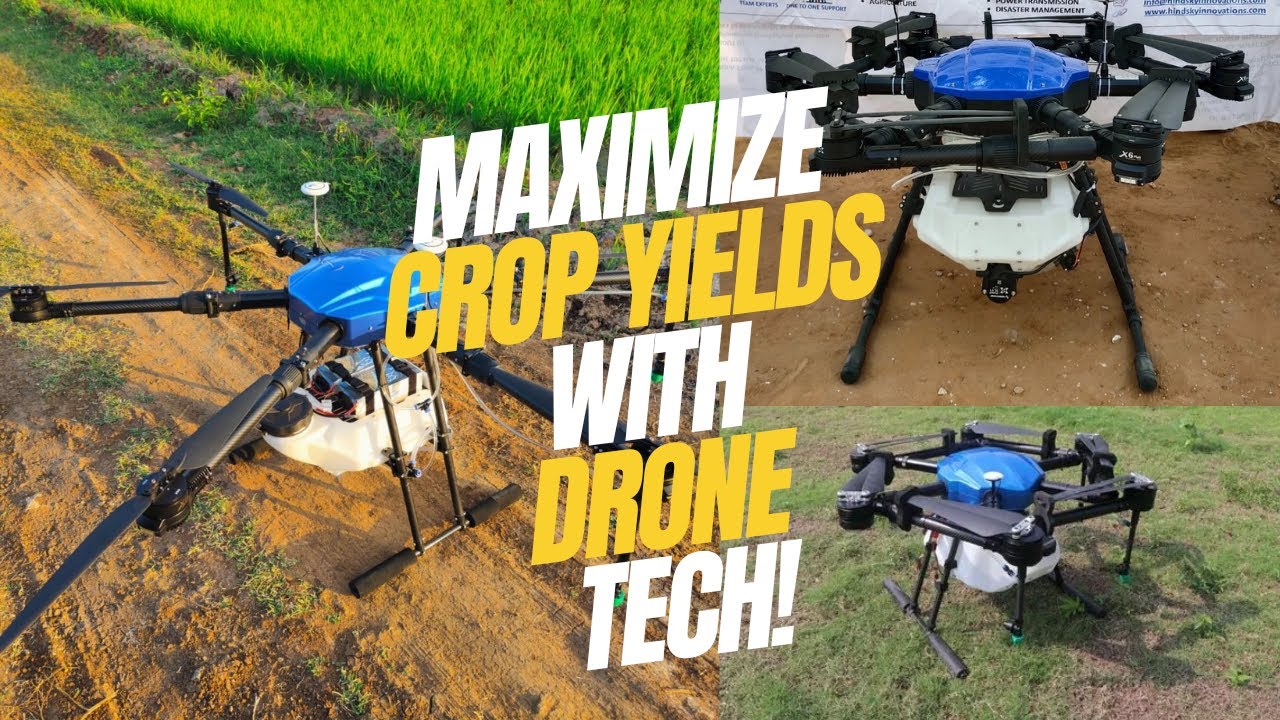
Sky High Harvest: How Drone Tech is Soaring Your Crop Yields
Alright, folks, gather ‘round! Have you ever looked out over your fields and dreamed of maximizing every square inch of your hard work? I’m talking about squeezing every last drop of potential out of your land. Well, what if I told you the future of farming is already here and it’s buzzing overhead? No, not aliens, I’m talking about drones. Yes, those amazing flying machines that most folks think of as toys are now on the front lines of a agricultural revolution. From precise pesticide application to in-depth crop analysis, these airborne helpers are not only transforming farms and boosting production numbers and also are working to maximize the value of our hard work. Intrigued? These videos delve into just how much of an impact drones are making and reveal the secrets to why so many farmers are choosing to invest in them. I’ve gone through them so you don’t have to; let’s unpack these revelations, shall we?
Precision is King: Drones aren’t just spraying fields willy-nilly. They use GPS and advanced sensors to target specific areas, applying pesticides, fertilizers, and water exactly where they’re needed. Think less waste, lower costs, and a healthier harvest – with greater profit margin.
Efficiency That Shaves Hours Off Your Week: Gone are the days of dragging heavy equipment or relying on human labour to survey fields. Drones cover large areas in a fraction of the time, letting farmers focus on other vital tasks, saving both time and hard cash.
Eyes in the Sky: Real-Time Data Collection: Imagine being able to get an instant crop health report. Drones provide just that, collecting data that helps guide your planting and management decisions, and helping make each new growing season be better than the last.
Sustainability Meets High-Tech: Drones are all about doing more with less. Their precise application methods drastically reduce chemical runoff and subsurface water contamination making your farming methods way more sustainable. It’s about protecting the environment while improving your business bottom line.
Yields That Soar: At the end of the day, it all comes down to those sweet crop yields. And drones? They are driving those numbers upward. With better nutrient distribution, more effective pest control, and real time response to crop challenges, farmers are seeing real jumps in the quality and quantity of their harvests.
From Small Farms to Mega Operations: Whether you’re working a small family plot or managing huge industrial fields, drone tech can scale to meet the specific needs of your operations, demonstrating an adaptable approach to the modern agriculturalist.
Beyond Spraying: Total Field Vision: Drone tech is also impacting agriculturalists by enabling full field mapping, moisture assessment and terrain mapping. This allows you to see the unseen, informing and improving future production.
The Sky’s the Limit: The Future of Drone Farming
The reality is drones aren’t some distant possibility for agricultural applications, they’re the present. We’re seeing autonomous drones being developed with AI to handle monitoring and even self correcting issues in the field without direct input from the user. Just imagine entire fields managed by a network of airborne specialists. We can see now how the future of farming is all about working smarter, not harder and using these high-tech tools to work with your land, rather than just working on it. The early adopters of these methods will be the ones making the biggest profits in the market as consumers demand more sustainability and quality production and are ready to pay for it. This will also force the competition to look into adopting similar methods, lest they fall behind and loose market share.
Ready to Fly Higher?
Alright, you’ve heard the buzz; drones aren’t just gadgets they are crucial tools for improving your harvests, managing your time and resources better and increasing your yearly production by improving crop yields. Now, I invite you to get the specifics by watching the videos below. Discover how the possibilities of using drones are quickly changing the future of farming and see how you can be part of that cutting edge. Take a look and I bet you’ll agree.
See the videos below
🌟 Drone Spraying for Agriculture: The Future of Efficient Farming! 🚜🌱X1 Super Machines26 views | 3 | November 28 2024 12:30:09 (2 comments)[ Read more … ]
🌟 Drone Spraying for Agriculture: The Future of Efficient Farming! 🚜🌱
🚁✨ Welcome to the Future of Farming!
Imagine a world where cutting-edge technology helps farmers achieve higher crop yields while significantly reducing costs and labor. That’s the power of drone spraying technology for agriculture! In this video, we take a deep dive into how drone sprayers are transforming the farming industry by offering precision, efficiency, and sustainability. 🌾
🌱 What You’ll Learn in This Video:
How drones spray pesticides, fertilizers, and water with pinpoint accuracy, ensuring optimal coverage while minimizing waste.
The benefits of using drones over traditional methods, including time savings, cost efficiency, and reduced environmental impact.
Real-life examples of drones in action-boosting productivity and helping farmers manage their fields like never before!
🌍 Why Drone Sprayers Are Game-Changers in Agriculture:
Traditional methods of spraying crops involve manual labor or heavy machinery, both of which come with significant challenges such as high costs, inefficiency, and health risks for workers. Drone sprayers, on the other hand, combine smart AI technology, lightweight mobility, and precision to revolutionize the way farmers care for their crops.
Precision Spraying: Sensors and GPS ensure drones spray only the targeted areas, saving resources and reducing environmental impact.
Labor Efficiency: One drone can cover as much ground as a team of workers, completing the job in a fraction of the time.
Cost Savings: Lower labor costs, reduced chemical usage, and minimal maintenance make drones a cost-effective solution for farmers.
Eco-Friendly: By optimizing pesticide and fertilizer usage, drone sprayers contribute to sustainable farming practices.
📈 The Impact of Drone Sprayers on Productivity and Revenue:
Farmers using drones report significant improvements in crop health and yield, thanks to accurate and timely applications of nutrients and pesticides. This, in turn, translates to higher profits and a competitive edge in the market. 💰🌾
🚜 Real-Life Applications of Drone Spraying:
Pest Control: Drones can identify and target pest-infested areas, applying pesticides only where necessary.
Fertilizer Application: Distribute fertilizers evenly across large fields, ensuring every plant receives the nutrients it needs.
Water Management: Precision watering helps conserve water while keeping crops healthy during dry seasons.
💡 Is Drone Spraying Right for Your Farm?
Whether you’re a small-scale farmer or managing vast agricultural lands, drone technology can be tailored to meet your needs. With various models and capabilities, there’s a drone solution for every type of farm!
🌟 What the Future Holds:
As drone technology continues to advance, we can expect even greater innovations in the farming industry. Autonomous drones equipped with AI may soon be able to monitor crops, identify issues, and take corrective action without human intervention. The possibilities are endless!
🎥 Watch this video to explore:
Stunning drone footage of fields being sprayed with precision.
Insights from experts on how drones are transforming the agricultural landscape.
Stories from farmers who have adopted drone technology to achieve outstanding results.
Would you consider using drone sprayers on your farm? Why or why not?
What excites you most about the potential of drones in agriculture?
Do you think drones will completely replace traditional farming methods one day?
Enjoy watching and learning about the incredible technology shaping the future of farming! 🌿🚁
Advertisement
Want MAXIMUM Crop Yields? Watch This Drone Spray Technology NOW!Samli Drones Co., Ltd.52 views | 0 | June 28 2024 05:30:58 (1 comments)[ Read more … ]
The most important thing in today’s modern farming culture is higher than the competition. Cutting-edge Samli drone spray technology can help with that. This kind of paradigm shift is transforming the industrial manufacturing sector.
🌱 Drone spray technology is changing the game in agriculture
– Maximized Crop Yields: Drones enable precise and effective delivery of fertilizers or pesticides, resulting in healthier crops and increased yields.
– Cost-effective: Drone technology helps farmers reduce labor, chemical, and water expenses by minimizing waste and improving resource utilization.
– Sustainability: Drone spraying effectively reduces environmental damage by delivering just the right quantity of inputs at the touch of the foliage, minimizing the occurrence of subsurface water runoff and chemical uptake.
– Time Efficiency: Drones can cover large fields in a fraction of the time it would take for manual spraying, allowing farmers to focus on other critical tasks.
– Real-Time Data Collection: Drones have the ability to collect valuable information from plant fields that helps feed valuable data back into crop planting and management for the next growing season.
🌎 How Samli Drones Are Revolutionizing Modern Farming:
The use of drones in agriculture is not just for chemical spraying; rather, it is a component of the larger precision farming movement. Drones provide in-time monitoring of crop health, and accordingly, farmers can take action in case of damage, either by spraying inefficient pesticides on a small local infestation area or by changing irrigation patterns according to the soil moisture information.
Farmers around the world are already seeing the results. The technology of drone spray has enabled agricultural farmers to realize their targets with lower costs and labor and increased productivity. Whether you’re a small-scale farmer or managing large agricultural operations, drones are proving to be a valuable tool in the modern farmer’s toolkit.
🚀 The Future of Agriculture:
The agricultural industry is changing fast, and drone technology is its pacesetter. With the capability to remotely monitor crops, apply treatments with precision, and collect real-time data, drones are enabling agriculture to be smarter, more sustainable, and more economically viable. Farmers using this technology will have a significant advantage over their counterparts in their ability to deliver to market high-quality, high-yielding, market-orientated crops to meet the increasing demand for food produced in the developing world.
Get the Samli drones today at the lowest prices. Don’t miss the chance.
Get in contact with us
➡️ WhatsApp: +86 152 1870 3002
➡️ Facebook: https://www.facebook.com/iramsamlidrones/
➡️ Instagram : https://www.instagram.com/iram_samlidrones/
➡️ Mail : info@samliglobal.com
Drone Technology for Agricultural PrecisionEthiopisTube ኢትዮጲስ ፩ይ50 views | 1 | July 16 2024 20:58:02 (0 comments)[ Read more … ]
The integration of drone technology into agriculture offers promising advancements, especially for regions like Tigray in Ethiopia. This technology can address several agricultural challenges by improving crop monitoring, enhancing yield prediction, and optimizing resource usage.
Multispectral and Thermal Imaging: Drones equipped with multispectral and thermal cameras can capture images to assess crop health, detect diseases, and monitor plant growth. These images provide valuable data on plant stress, nutrient deficiencies, and pest infestations.
Regular Surveillance: Frequent aerial surveys allow for timely detection of issues that may not be visible from the ground, enabling farmers to take corrective actions quickly.
Variable Rate Application: Drones can facilitate precision agriculture by enabling variable rate application of inputs such as fertilizers, pesticides, and water. This ensures that crops receive the right amount of resources at the right time, improving efficiency and reducing waste.
Soil and Field Analysis: Drones can map fields to analyze soil conditions, moisture levels, and terrain variations. This data helps in creating detailed field maps, which are crucial for effective planning and resource allocation.
Yield Estimation and Forecasting:
Data Collection and Analysis: By capturing high-resolution images and using advanced algorithms, drones can estimate crop yields with high accuracy. This helps in forecasting production and planning market strategies.
Historical Data Comparison: Comparing current data with historical records enables farmers to understand trends, improve practices, and increase productivity.
Disaster Management:
Drought and Flood Monitoring: Drones can monitor the effects of droughts and floods, providing real-time data to support disaster management efforts. This information is critical for timely interventions and mitigating losses.
Pest and Disease Outbreaks: Early detection of pest and disease outbreaks through drone surveillance allows for prompt action to contain and manage such events.
Benefits of Drone Technology in Tigray
Increased Efficiency and Productivity:
Resource Optimization: Drones help in optimizing the use of inputs like water, fertilizers, and pesticides, leading to increased efficiency and cost savings.
Time Savings: Automated drone operations reduce the time required for manual field inspections and interventions.
Improved Decision Making:
Accurate Data: High-quality, real-time data supports better decision-making and strategic planning for farmers.
Predictive Analytics: Drones enable the use of predictive analytics to forecast trends and potential issues, allowing for proactive management.
Sustainable Farming Practices:
Environmental Impact: Precision agriculture practices supported by drones minimize the environmental impact of farming activities by reducing the overuse of chemicals and conserving water.
Climate Resilience: By providing data for better management of resources, drones contribute to building resilience against climate change impacts.
Implementation Challenges and Solutions
Initial Costs and Training:
Investment: The initial investment in drone technology can be high, but the long-term benefits and savings justify the expenditure.
Training and Support: Providing training and support to farmers and agricultural workers is essential for the successful implementation of drone technology. Partnerships with local educational institutions and tech companies can facilitate this.
Regulatory and Infrastructure Issues:
Regulations: Navigating the regulatory landscape for drone usage in agriculture is crucial. Collaborating with government agencies to establish clear guidelines and policies will help in smooth adoption.
Infrastructure: Developing the necessary infrastructure for drone operations, including charging stations and maintenance facilities, is important for sustained use.
Data Management:
Data Handling: Managing and analyzing the large volumes of data collected by drones requires robust data management systems. Implementing cloud-based solutions and employing data analytics experts can address this challenge.
Conclusion
Integrating drone technology into agriculture in Tigray holds immense potential to transform the agricultural landscape. By improving efficiency, enhancing productivity, and promoting sustainable practices, drones can significantly contribute to the region’s agricultural development. Addressing the challenges through strategic investments and partnerships will pave the way for a successful adoption of this innovative technology.
Advertisement
// LONG-RANGE FPV & DIGITAL CINEMATOGRAPHY
// The Horizon Feed
Bi-weekly field notes on digital HD links (O4/O3), Betaflight PID telemetry, sensor dynamic range, and cinema drone builds.
About the Author
Patryk Alexander is an associate copy editor at 4kVideoDrones.com, where he sharpens articles and helps keep the website's content clean and error-free. With a background in creative writing, Patryk brings a unique perspective to his editing that helps make 4kVideoDrones.com's content engaging and informative. When he's not editing or writing, Patryk enjoys spending time with his family and exploring the great outdoors.